















































































































7 Cancer-Fighting Foods to Include in Your Diet
Author: RVLNSV PRASAD
Updated On: September 2026
About Us
Author Bio
Editorial Policy
Contact Us

Introduction
Food cannot guarantee protection from cancer. It also cannot replace cancer screening, medical treatment, or advice from a qualified healthcare professional.
However, what you eat regularly can influence several factors connected with cancer risk, including body weight, dietary fiber intake, overall diet quality, and exposure to certain foods associated with higher cancer risk.
That is why the idea of 7 cancer-fighting foods needs a little context.
There is no single food that can prevent cancer by itself. The American Institute for Cancer Research (AICR) explains that cancer prevention is better understood as an overall eating pattern rich in vegetables, fruits, whole grains, beans, and other plant foods. American Institute for Cancer Research: Foods That Fight Cancer
The World Cancer Research Fund (WCRF) similarly recommends making whole grains, vegetables, fruit, and legumes a major part of the usual diet while limiting processed meat, red meat, sugary drinks, fast foods, and alcohol. World Cancer Research Fund: Cancer Prevention Recommendations
So this article does not present these foods as cancer cures.
Instead, it explains seven nutritious foods or food groups that can fit into a cancer-prevention eating pattern, what researchers know about them, and simple ways to eat them in everyday life.
Quick Answer
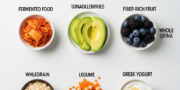
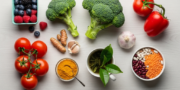
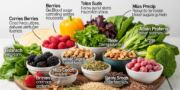
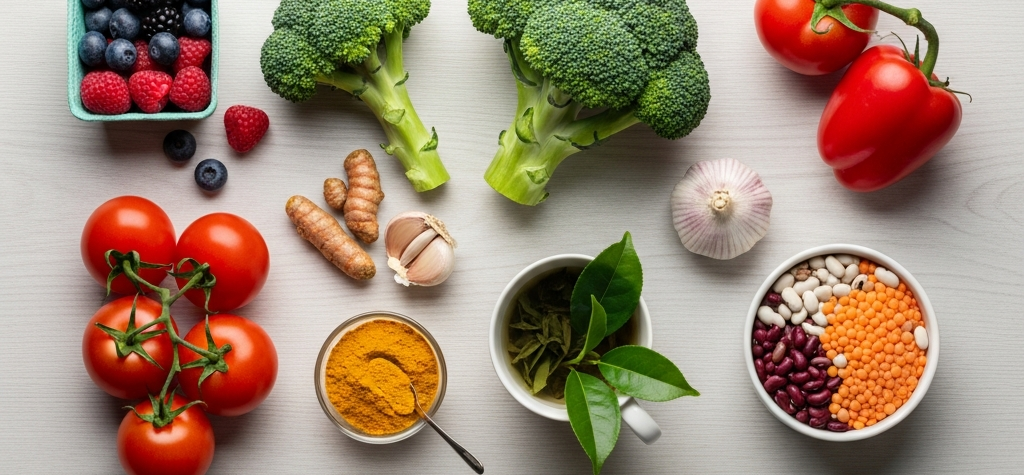
The 7 cancer-fighting foods discussed in this article are
- Broccoli and other cruciferous vegetables
- Berries
- Tomatoes
- Garlic and other allium vegetables
- Leafy green vegetables
- Beans and lentils
- Whole grains
These foods provide combinations of dietary fiber, vitamins, minerals, and naturally occurring plant compounds called phytochemicals.
But the bigger picture matters more than any individual food.
A diet that regularly includes a variety of plant foods is more meaningful for cancer prevention than eating one so-called superfood occasionally. AICR recommends making whole grains, vegetables, fruits, and beans major parts of the normal diet. AICR: Eat a Diet Rich in Whole Grains, Vegetables, Fruits and Beans
Key Takeaways
- No single food can prevent or cure cancer.
- A varied, plant-rich eating pattern is more important than individual foods.
- Broccoli and other cruciferous vegetables provide fiber and phytochemicals.
- Berries provide fiber and numerous plant compounds.
- Tomatoes provide lycopene and other nutrients.
- Garlic and other allium vegetables contain sulfur-containing compounds.
- Leafy greens provide fiber, folate, carotenoids, and other nutrients.
- Beans and lentils are important sources of fiber and plant protein.
- Whole grains provide fiber and other potentially protective compounds.
- Whole fruit is generally a better everyday choice than relying heavily on fruit juice.
- Processed meat, excess red meat, alcohol, and sugar-sweetened drinks deserve more attention than simply adding a “superfood.”
- Food is part of cancer prevention, not a replacement for screening or medical treatment.
What Does “Cancer-Fighting Food” Actually Mean?
The phrase “cancer-fighting foods” is popular online, but it can be misleading.
A food does not literally enter the body and fight cancer like a cancer medicine.
Scientists study foods and their components in several ways. Some compounds show interesting effects in laboratory or animal research. However, findings from cells or animals do not automatically mean that eating the food prevents cancer in humans.
The National Cancer Institute explains that many dietary components have been studied for possible relationships with cancer, but evidence from human populations does not definitively show that most individual dietary components directly cause or protect against cancer. National Cancer Institute: Diet and Cancer Risk Factors
That distinction is important.
Instead of asking:
“Which food kills cancer cells?”
a more useful question is
“Which foods can help me build a healthy dietary pattern associated with lower cancer risk?”
That change in thinking makes cancer nutrition much more practical.
1. Broccoli and Other Cruciferous Vegetables
Broccoli is one of the most commonly discussed foods in cancer-prevention nutrition.
It belongs to the cruciferous vegetable family, which also includes:
- Cauliflower
- Cabbage
- Brussels sprouts
- Kale
- Bok choy
- Radish
- Turnip
These vegetables provide fiber, vitamins, minerals, and several phytochemicals.
Broccoli is particularly interesting because cruciferous vegetables contain compounds related to glucosinolates and their breakdown products.
Researchers continue to study these compounds because laboratory research has identified biological activities that could be relevant to cancer development.
However, it would be inaccurate to say that broccoli prevents cancer on its own.
AICR includes broccoli and other cruciferous vegetables among its cancer-prevention food choices while emphasizing that overall dietary variety matters. AICR: Foods That Fight Cancer
Easy ways to eat more broccoli
You do not need an expensive recipe.
Try:
- Steamed broccoli with dal and brown rice
- Broccoli added to vegetable pulao
- Broccoli mixed into an omelet
- Roasted broccoli with garlic
- Broccoli added to soup
- Chopped broccoli in a vegetable stir-fry
A people-first tip
If you dislike broccoli, do not force yourself to eat it every day.
Cabbage, cauliflower, radish, and other vegetables can help create variety.
Cancer prevention is not about finding one perfect vegetable.
It is about creating eating habits that you can maintain.
2. Berries
Berries are another useful addition to a plant-rich diet.
Examples include:
- Blueberries
- Strawberries
- Raspberries
- Blackberries
- Cranberries
They provide fiber, vitamins, and numerous naturally occurring plant compounds.
AICR includes berries among foods that can form part of a cancer-prevention eating pattern. AICR: Foods That Fight Cancer
One advantage of berries is that they can replace less nutritious sweet snacks.
For example, instead of eating biscuits with tea every afternoon, you could occasionally have:
Plain yogurt + berries + a few unsalted nuts.
That change does more than simply add antioxidants.
It can also improve the overall quality of the snack.
Frozen berries are useful too.
Fresh berries can be expensive or unavailable depending on where you live.
Frozen berries can be a practical alternative.
You can add them to:
- Oatmeal
- Plain yogurt
- Smoothies
- Homemade fruit bowls
Choose products without large amounts of added sugar.
Do not turn berries into a sugary drink.
Eating whole berries and drinking a sweetened berry beverage are not equivalent.
Whole fruit provides fiber and requires chewing, which can make it more filling.
WCRF recommends emphasizing whole plant foods and notes that fruit and vegetables are important sources of dietary fiber. World Cancer Research Fund: Fruit, Vegetables and Cancer
3. Tomatoes
Tomatoes are an everyday food in many Indian kitchens.
They can be eaten raw, cooked, or included in curries, soups, and vegetable dishes.
Tomatoes contain lycopene, a carotenoid that has been widely studied in relation to health and cancer.
Tomatoes are also useful because they can make healthy meals more enjoyable.
For example, tomato can form the base of:
- Vegetable curries
- Dal
- Soups
- Chutneys
- Salads
- Homemade pasta sauces
- Vegetable sandwiches
What about cooked tomatoes?
Cooking tomatoes changes the availability of some compounds, including lycopene.
But this does not mean that cooked tomatoes are automatically “better” than raw tomatoes for cancer prevention.
The practical answer is simple:
Eat tomatoes in different forms.
That gives you variety without turning one food into a miracle remedy.
A simple Indian idea
Try making a tomato-based vegetable curry with:
- Tomato
- Onion
- Garlic
- Spinach
- Beans
- Carrot
- Cauliflower
You are then getting a mixture of plant foods rather than relying on tomato alone.
That is much closer to the dietary pattern recommended by cancer-prevention organizations.
4. Garlic and Other Allium Vegetables
Garlic belongs to the allium family.
Other examples include:
- Onions
- Leeks
- Shallots
- Chives
Garlic contains sulfur-containing compounds that researchers have investigated for various biological effects.
AICR includes garlic among foods studied in the context of cancer prevention. AICR: Foods That Fight Cancer
But garlic should remain what it naturally is:
a nutritious food and flavorful ingredient.
It should not be presented as a cancer treatment.
An easy habit
Instead of asking yourself:
“Am I eating enough garlic to prevent cancer?”
try:
“Can I use garlic to make healthy food taste better?”
That approach is much easier to maintain.
Add garlic to:
- Dal
- Vegetable stir-fries
- Soups
- Homemade chutneys
- Beans
- Lentils
- Roasted vegetables
This is one of the simplest ways to improve the taste of healthy meals without depending heavily on sauces or highly processed condiments.
5. Leafy Green Vegetables
Leafy greens deserve a regular place on the plate.
Useful choices include:
- Spinach
- Amaranth leaves
- Fenugreek leaves
- Kale
- Mustard greens
- Moringa leaves
- Other locally available leafy vegetables
They can provide fiber, folate, carotenoids, and other nutrients.
AICR identifies leafy green vegetables among foods that can contribute to a plant-rich cancer-prevention pattern. AICR: Foods That Fight Cancer
Do not worry about finding an foreign “super green.”
You do not need imported kale to build a healthy diet.
Indian greens can be excellent choices.
For example:
Spinach + dal + vegetables + whole-grain roti
can create a more useful meal than buying an expensive “cancer detox” powder.
People-first insight
One of the easiest mistakes in nutrition is assuming that healthier eating requires expensive foods.
It usually does not.
Local vegetables, seasonal fruit, beans, lentils, whole grains, and nuts can provide a strong nutritional foundation.
6. Beans and Lentils
Beans and lentils are sometimes overlooked when people search for 7 cancer-fighting foods.
They should not be.
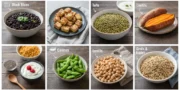
Examples include:
- Lentils
- Chickpeas
- Kidney beans
- Black beans
- Green gram
- Black gram
- Cowpeas
- Peas
- Other pulses
They provide protein and dietary fiber.
AICR specifically recommends beans and other pulses as major components of a plant-rich diet. AICR: Eat a Diet Rich in Whole Grains, Vegetables, Fruits, and Beans
WCRF also identifies whole grains, vegetables, fruits, and legumes as key components of a cancer-prevention eating pattern. World Cancer Research Fund: Wholegrains, Vegetables, Fruit and Beans
Why fiber matters
Fiber is particularly important.
Research summarized by WCRF shows strong evidence that foods containing dietary fiber reduce colorectal cancer risk. World Cancer Research Fund: Fibre, Wholegrains and Cancer
Beans and lentils can therefore be useful building blocks in a healthy diet.
Easy Indian meal combinations
Try:
Dal + vegetables + brown rice
or
Chana + vegetables + whole-wheat roti
or
Rajma + brown rice + salad
These combinations are practical because they fit foods that many Indian households already know how to cook.
7. Whole Grains
Whole grains are the final food group in this list.
Examples include:
- Oats
- Brown rice
- Barley
- Whole wheat
- Millets
- Quinoa
- Whole-grain breads
- Other minimally processed whole grains
Whole grains contain the bran, germ, and endosperm.
That means they generally provide more fiber and nutrients than refined grains.
AICR identifies whole grains as an important part of cancer-prevention nutrition and reports that evidence supports a protective relationship between whole-grain consumption and colorectal cancer. AICR: Whole Grains and Cancer Prevention
WCRF similarly reports strong evidence that whole grains decrease colorectal cancer risk. World Cancer Research Fund: Wholegrains, Vegetables, Fruit and Beans
You do not have to completely stop eating rice.
This is especially important for Indian readers.
Healthy eating does not automatically mean eliminating rice.
A better approach can be
Large rice portion + few vegetables
Moderate rice portion + plenty of vegetables + dal/beans + another protein source
The goal is to improve the overall meal.
Simple whole-grain swaps
| Instead of | Try more often. |
|---|---|
| White bread | Whole-grain bread |
| Refined cereal | Oats |
| Refined flour foods | Whole-wheat options |
| Large serving of white rice | Moderate rice + vegetables + pulses |
| Refined snack foods | Oats, fruit, nuts, or roasted legumes |
| You do not need to change everything overnight. | |
| One swap at a time is more sustainable. |
The Bigger Picture: The Food Pattern Matters More Than the Food List
Here is one of the most important points in this article.
Eating broccoli once a week does not cancel out an otherwise poor diet.
Likewise, eating berries does not compensate for regularly consuming processed meat, excessive alcohol, or large amounts of highly processed foods.
WCRF describes its cancer-prevention recommendations as a package of behaviors rather than isolated rules. World Cancer Research Fund: Cancer Prevention Recommendations as a Package
This means your weekly pattern matters.
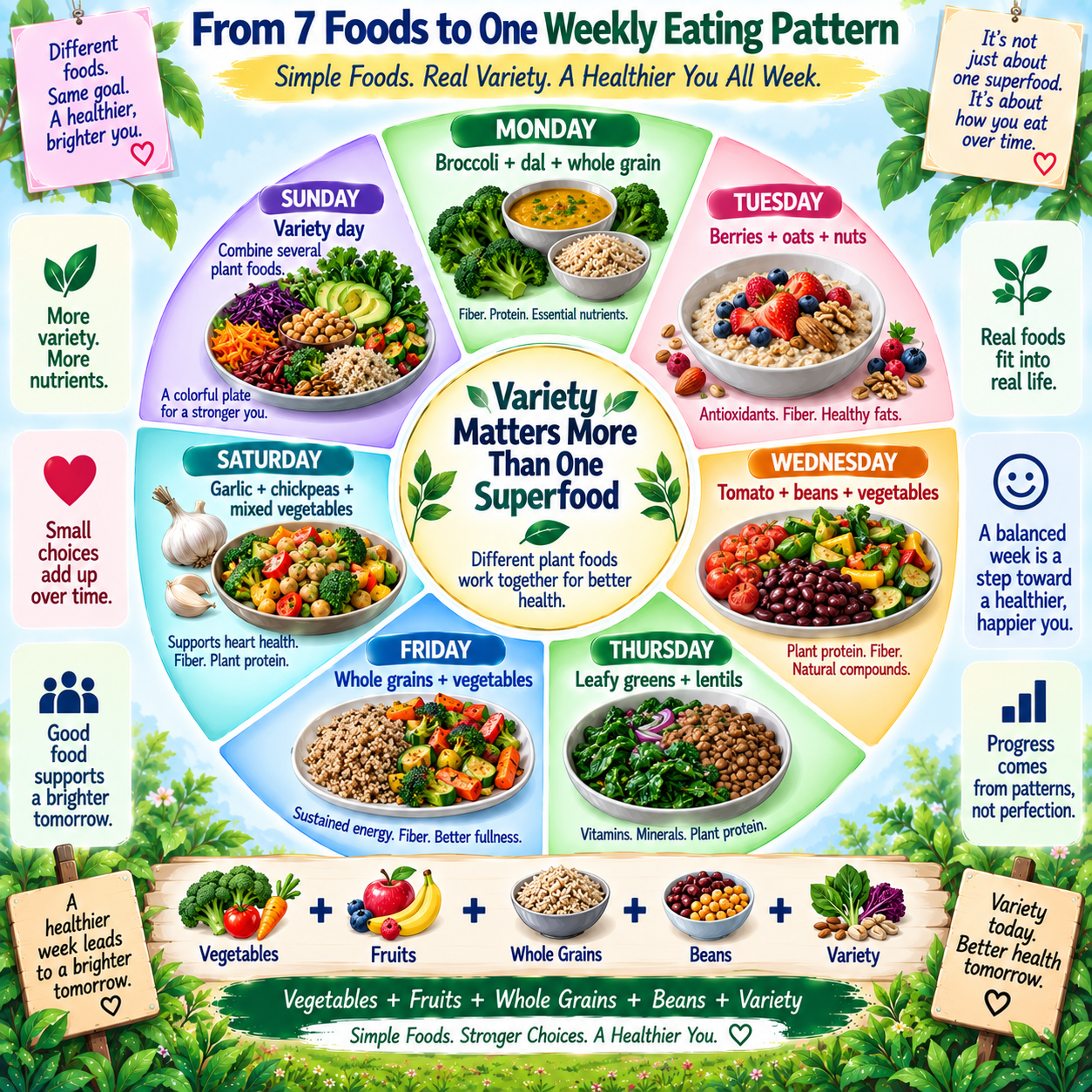
A practical cancer-prevention plate
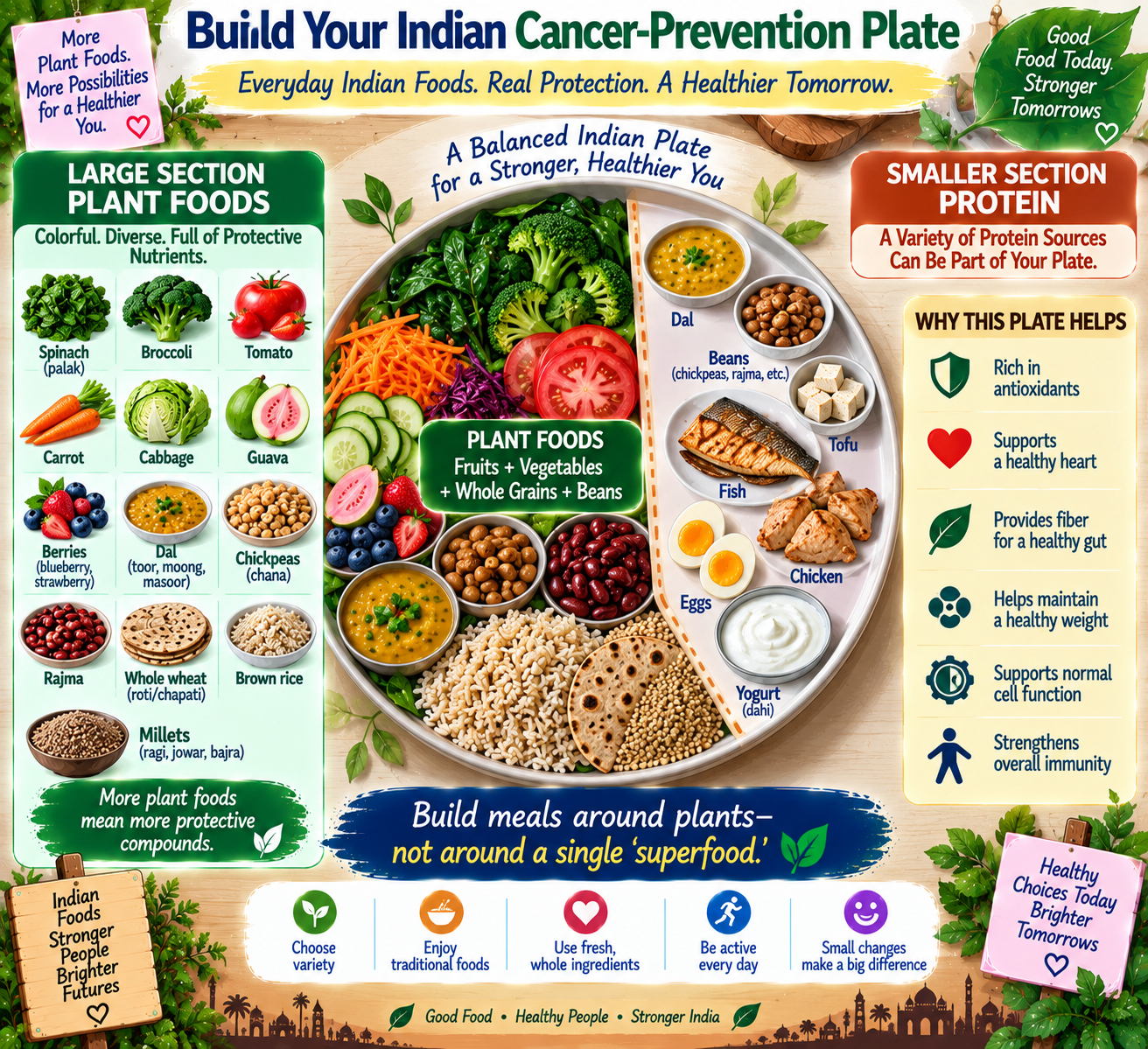
A simple approach is
Half the plate: vegetables and other plant foods
One quarter: whole grains or another high-fiber carbohydrate
One quarter: protein such as beans, lentils, fish, poultry, tofu, eggs, or another suitable option
Add:
- Whole fruit
- Water or another unsweetened drink
- Small amounts of nuts or seeds when appropriate
AICR’s New American Plate similarly emphasizes making plant foods the largest part of the meal. AICR: New American Plate
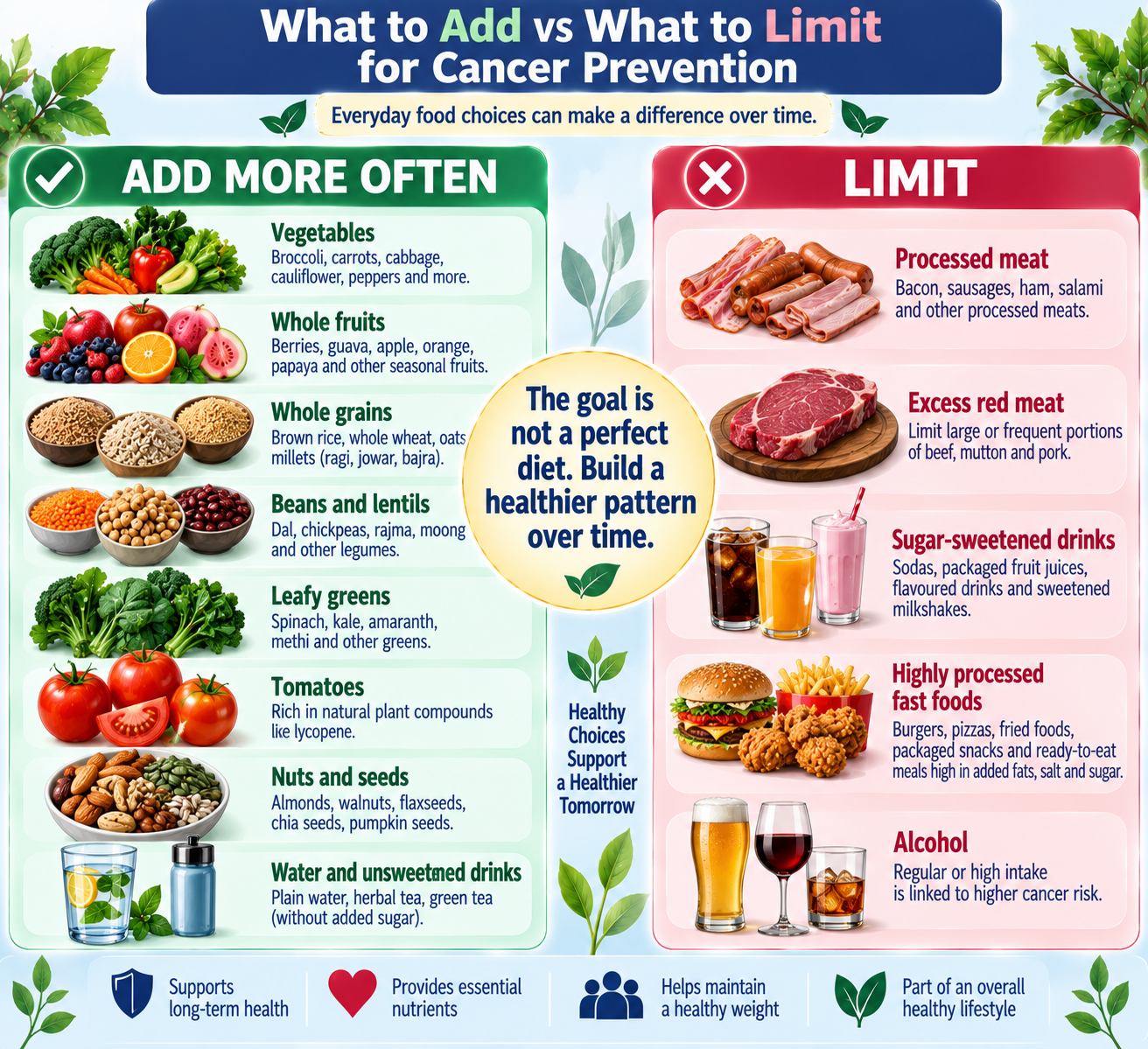
Foods to Limit When Thinking About Cancer Prevention
Adding healthy foods is only half of the conversation.
It is also useful to understand foods and drinks that major cancer-prevention organizations recommend limiting.
Processed meat
Processed meat includes products such as
- Bacon
- Sausages
- Ham
- Some cured meats
- Other processed meat products
WCRF recommends limiting processed meat. WCRF Cancer Prevention Recommendations
Red meat
Red meat includes beef, pork, and lamb.
The goal is not necessarily to treat every meal containing red meat as dangerous.
Instead, keep portions and frequency reasonable and make beans, lentils, vegetables, whole grains, and other foods more prominent in the overall diet.
Sugar-sweetened drinks
Examples include:
- Soft drinks
- Sugary packaged beverages
- Sweetened energy drinks
- Other drinks containing substantial added sugar
WCRF recommends limiting sugar-sweetened drinks as part of cancer-prevention guidance. WCRF Cancer Prevention Recommendations
Alcohol
Alcohol is an important cancer-prevention consideration.
The American Cancer Society includes avoiding or limiting alcohol as part of its diet and physical activity guidance for cancer prevention. American Cancer Society: Diet and Physical Activity Guideline for Cancer Prevention
This is one reason a cancer-prevention article should never focus only on “superfoods.”
The drinks you consume can matter too.
A Simple One-Day Cancer-Prevention Eating Pattern
Here is an example rather than a strict diet prescription.
| Time | Practical option |
|---|---|
| Breakfast | Oatmeal with fruit and a few unsalted nuts |
| Mid-morning | Whole fruit |
| Lunch | Dal + vegetables + moderate brown rice or whole-wheat roti |
| Evening | Roasted chickpeas or unsalted nuts |
| Dinner | Mixed vegetables + beans/tofu/fish/other suitable protein + whole grain |
| Drink | Water or unsweetened beverage |
| This is not a cancer treatment plan. | |
| It is simply an example of how the foods discussed above can become part of an overall healthy pattern. |
Three Easy Food Habits Most People Can Actually Maintain
1. Add one vegetable before removing a food.
Instead of starting with a long list of foods you are “not allowed” to eat, add vegetables to lunch and dinner.
This can naturally reduce the space available for less nutritious foods.
2. Upgrade one carbohydrate.
If you regularly eat refined grains, change one meal.
For example:
White bread → whole-grain bread
or
Refined breakfast cereal → oats
or
Large refined-grain portion → moderate whole grain + vegetables + pulses
Small changes are easier to repeat.
3. Keep fruit visible.
Place whole fruit somewhere you can easily see it.
When fruit is convenient, it becomes easier to choose.
This sounds simple, but practical food environments often matter more than complicated nutrition rules.
A Unique “Cancer Prevention Grocery Rule”
Here is a simple method you can use when shopping.
For every major grocery trip, try to buy:
2 vegetables + 2 fruits + 2 pulses/beans + 1 whole grain + 1 healthy protein source
For example:
- Spinach
- Broccoli
- Apples
- Guava
- Chickpeas
- Lentils
- Oats
- Eggs or another suitable protein
This is not a medical prescription.
It is simply a shopping strategy designed to make a plant-rich diet easier.
It also prevents the common mistake of buying expensive “superfoods” while having very few basic vegetables and legumes at home.
Common Mistakes People Make About Cancer-Fighting Foods
Mistake 1: Believing one food can prevent cancer
There is no magic food.
AICR explicitly states that no single food can protect against cancer by itself. AICR: Foods That Fight Cancer
Mistake 2: Drinking fruit juice instead of eating fruit
Juice can provide nutrients, but whole fruit generally provides more fiber and is a better everyday choice.
AICR recommends emphasizing whole fruit rather than relying on juice. AICR: Plant-Rich Diet and Cancer Prevention
Mistake 3: Taking supplements instead of improving the diet
More vitamins do not automatically mean more cancer protection.
AICR does not recommend dietary supplements for cancer prevention in place of a healthy diet. AICR: Do Not Use Supplements for Cancer Prevention
Mistake 4: Following an extreme detox
Juice cleanses, fasting programs, and “cancer detox” products can distract from basic nutrition.
The National Cancer Institute notes that there is no proof that a particular diet, food, supplement, herb, or nutrition trend can slow, cure, or prevent cancer recurrence. National Cancer Institute: Diets, Supplements, and Cancer
Mistake 5: Thinking healthy food cancels unhealthy habits
Eating broccoli does not cancel heavy alcohol consumption.
Eating berries does not cancel regular processed meat intake.
A healthy diet works best as part of a broader lifestyle.
Latest Research Direction: Why Researchers Are Moving Beyond “Superfoods”
One of the most important developments in cancer nutrition is the increasing focus on dietary patterns rather than isolated foods.
Scientists can study individual compounds, but human diets are complicated.
People eat combinations of foods.
They also differ in body weight, activity levels, smoking status, alcohol intake, genetics, environment, and other factors.
NCI emphasizes this limitation when discussing dietary components and cancer risk: associations found in population studies do not automatically establish that one dietary component directly causes a change in cancer risk. National Cancer Institute: Diet and Cancer Risk Factors
WCRF’s recommendations therefore focus on a package that includes:
- Healthy weight
- Physical activity
- Whole grains
- Vegetables
- Fruits
- Beans
- Limiting fast foods
- Limiting red and processed meat
- Limiting sugar-sweetened drinks
- Limiting alcohol
World Cancer Research Fund: Cancer Prevention Recommendations
This is a more realistic way to understand the current evidence.
What About Turmeric, Green Tea, and Other Popular Foods?
You may notice that turmeric and green tea are not included in my seven-food list.
That does not mean they are “bad.”
They can be nutritious parts of a balanced diet.
However, the internet often takes laboratory research on individual compounds and turns it into claims that a food or drink can prevent or treat cancer.
That leap is not justified.
NCI specifically cautions that there is no proof that nutrition trends, foods, vitamins, minerals, supplements, or herbs can slow, cure, or prevent cancer recurrence. National Cancer Institute: Diets, Supplements, and Cancer
So enjoy turmeric in cooking if you like it.
Drink unsweetened tea if you enjoy it.
But do not replace evidence-based cancer care with them.
Can These Foods Prevent Cancer?
They may contribute to a dietary pattern associated with lower risk for some cancers, but no food can guarantee cancer prevention.
Cancer has many causes.
Risk can be influenced by:
- Age
- Genetics
- Family history
- Smoking
- Alcohol
- Body weight
- Physical activity
- Certain infections
- Environmental exposures
- Hormonal factors
- Other medical and lifestyle factors
Food is one part of the larger picture.
The American Cancer Society’s cancer-prevention guidance therefore combines diet with healthy weight, physical activity, and other lifestyle factors rather than presenting food as a standalone solution. American Cancer Society: Diet and Physical Activity Guideline for Cancer Prevention
What If You Already Have Cancer?
This distinction is extremely important.
If you have been diagnosed with cancer, do not attempt to treat the disease by changing your diet alone.
Cancer treatment may involve surgery, radiation, chemotherapy, immunotherapy, targeted therapy, hormone therapy, or other approaches depending on the cancer.
Nutrition can still be important during treatment.
It may help you maintain adequate energy and nutrients and manage certain treatment-related nutrition problems.
But your eating plan should be individualized with your oncology team or a qualified oncology dietitian when appropriate.
The NCI specifically states that no particular diet, food, vitamin, supplement, herb or nutrition trend has been proven to slow or cure cancer. National Cancer Institute: Diets, Supplements, and Cancer
Cancer Prevention Is More Than Food
If your goal is reducing cancer risk, do not stop with your grocery list.
Other evidence-based actions matter.
Stay physically active.
Regular physical activity is part of major cancer-prevention recommendations.
The American Cancer Society recommends being physically active as part of its cancer-prevention guideline. American Cancer Society: Diet and Physical Activity Guideline
Maintain a healthy weight.
Excess body fat is associated with several cancers.
Healthy eating and physical activity can work together to support healthy weight management.
Do not smoke.
Food cannot compensate for tobacco exposure.
Smoking prevention and cessation remain major cancer-prevention priorities.
Protect your skin.
Diet is only one part of cancer prevention.
Reducing excessive ultraviolet exposure is also important.
Follow recommended cancer screening.
Screening can detect certain cancers or precancerous changes early.
Your appropriate screening schedule depends on factors such as age, sex, family history, and personal risk.
A Simple 7-Day Strategy
You do not need to completely redesign your diet tomorrow.
Try this approach.
>Day 1: Add one extra vegetable to lunch.
>Day 2: Replace one refined-grain food with a whole-grain option.
>Day 3: Add beans or lentils to one meal.
>Day 4: Eat one whole fruit instead of a sweet packaged snack.
>Day 5: Add broccoli, cabbage, or another cruciferous vegetable.
>Day 6: Prepare one meal at home using mostly minimally processed ingredients.
>Day 7: Review your week and choose the two changes you can realistically continue.
This approach is deliberately simple.
A perfect diet followed for three days is less useful than a realistic diet followed for years.
7 Cancer-Fighting Foods: Practical Comparison Table
| Food | What it provides | Simple way to use it |
|---|---|---|
| Broccoli | Fiber and phytochemicals | Steam, roast, or add to curry. |
| Berries | Fiber and plant compounds | Add to oats or yogurt. |
| Tomatoes | Lycopene and nutrients | Curry, salad, or soup |
| Garlic | Sulfur-containing compounds | Add to dal and vegetables. |
| Leafy greens | Fiber, folate, and carotenoids | Dal, curry, or stir-fry |
| Beans and lentils | Fiber and plant protein | Dal, chana, rajma, or soups |
| Whole grains | Fiber and nutrients | Oats, whole wheat, barley, or brown rice |
| Remember that this table is not a ranking. | ||
| There is no scientifically established “number one cancer-fighting food.” | ||
| The value comes from variety. |
FAQ
What are the 7 cancer-fighting foods?
The seven foods or food groups covered here are broccoli and other cruciferous vegetables, berries, tomatoes, garlic and other allium vegetables, leafy greens, beans and lentils, and whole grains.
They should be viewed as components of a healthy eating pattern rather than cancer treatments.
Can one food prevent cancer?
No.
AICR states that no single food can protect against cancer by itself. The overall dietary pattern is more important. AICR: Foods That Fight Cancer
Are tomatoes good for cancer prevention?
Tomatoes can be part of a healthy cancer-prevention diet and contain lycopene and other nutrients. However, eating tomatoes does not guarantee protection from cancer.
Are berries cancer-fighting foods?
Berries can contribute fiber and various plant compounds to the diet. They are a nutritious choice, but they should not be described as a cancer cure or guaranteed preventive food.
Are beans good for cancer prevention?
Beans and lentils are excellent sources of dietary fiber and plant protein and are recommended as important components of a plant-rich dietary pattern. AICR: Whole Grains, Vegetables, Fruits, and Beans
Should I stop eating rice to prevent cancer?
Not necessarily.
For many people, a better strategy is to moderate portions and combine rice with vegetables, pulses, and other nutritious foods. Whole-grain choices can also increase dietary fiber.
Is turmeric a cancer cure?
No.
Turmeric can be used as a food ingredient, but it should not be promoted as a cancer treatment. There is insufficient evidence to replace standard cancer care with turmeric or other dietary remedies. National Cancer Institute: Diets, Supplements, and Cancer
Should I take supplements for cancer prevention?
Do not take supplements specifically for cancer prevention unless a qualified healthcare professional recommends them for an individual reason.
AICR recommends obtaining nutrients primarily from whole foods rather than relying on supplements for cancer protection. AICR: Do Not Use Supplements for Cancer Prevention
What foods should I limit?
Major cancer-prevention organizations recommend limiting processed meat, limiting red meat, limiting sugar-sweetened drinks, limiting fast foods, and limiting alcohol. World Cancer Research Fund: Cancer Prevention Recommendations
Bottom Line
The best way to understand 7 cancer-fighting foods is not as seven magical foods that can stop cancer.
Instead, think of them as seven useful components of a healthier eating pattern.
Broccoli can add vegetables and phytochemicals.
Berries can add fruit and fiber.
Tomatoes can add nutrients and lycopene.
Garlic can add flavor and plant compounds.
Leafy greens can add fiber and micronutrients.
Beans and lentils can provide fiber and plant protein.
Whole grains can increase fiber and improve the quality of carbohydrate choices.
But the strongest message is bigger than the list.
Build most meals around vegetables, fruits, whole grains, and beans. Choose minimally processed foods more often. Limit processed meat, excess red meat, sugary drinks, and alcohol. Stay physically active, maintain a healthy weight, avoid tobacco, and follow appropriate screening recommendations.
That approach is much closer to what current cancer-prevention evidence supports than searching for one miracle food.
Author Note
This article was written with a people-first approach to cancer nutrition. The purpose is to explain what current evidence says about foods and dietary patterns associated with cancer prevention, without presenting individual foods as cancer cures.
Nutrition research continues to develop, and evidence for individual foods is often less certain than evidence for broader dietary patterns.
Author: RVLNSV PRASAD
Medical Disclaimer
This article is for general educational purposes only. It is not medical advice, diagnosis, or treatment.
No food discussed in this article has been proven to prevent, cure, or treat cancer by itself.
If you have cancer, are undergoing cancer treatment, have unexplained symptoms, or have a high inherited or family risk of cancer, speak with your doctor or qualified oncology healthcare professional before making major dietary changes.
Do not delay cancer screening, diagnosis, or treatment because of information found online.
Fitness Disclaimer
Physical activity can support overall health and is an important component of cancer-prevention recommendations, but exercise recommendations should be individualized.
If you have cancer, are receiving treatment, have a chronic medical condition, or have been inactive for a long period, speak with your healthcare professional before beginning a new exercise program.
Strong E-E-A-T Sources
The recommendations in this article are based primarily on major cancer and nutrition organizations rather than supplement companies or commercial wellness websites.
- American Institute for Cancer Research — Foods That Fight Cancer
- AICR — Whole Grains, Vegetables, Fruits and Beans
- AICR — Cancer Prevention Recommendations
- World Cancer Research Fund — Cancer Prevention Recommendations
- World Cancer Research Fund—Wholegrains, Vegetables, Fruit and Beans
- World Cancer Research Fund — Fibre, Wholegrains and Cancer
- American Cancer Society — Diet and Physical Activity Guideline for Cancer Prevention
- National Cancer Institute — Diet and Cancer Risk
- National Cancer Institute—Diets, Supplements, and Cancer
Related Content
- The Nutritional Secrets of Superfoods6 Main Symptoms Of Prostate Cancer
- 6 Main Symptoms Of Prostate Cancer
- A Holistic Approach to Breast Cancer
- 15 Effective Ways To Lower Your Cancer Risk
- 5 Plant based meals for healthy weight loss









[…] 7 Cancer Fighting Foods Include in Your Diet […]
[…] 7 Cancer Fighting Foods Include in Your Diet […]